Advertisement
The rich, intoxicating aroma of simmering broth wafting through my kitchen always transports me to bustling streets of Vietnam. Diving into the world of Vietnamese cuisine is not just about cooking; it’s about creating experiences—especially when it comes to my Homemade Vietnamese Pho Soup Recipe. With its comforting layers of flavor, this traditional dish showcases a fragrant broth that warms the soul. This recipe is perfect for cozy evenings spent with loved ones or if you’re simply in need of a delicious, gluten-free meal. The best part? It’s easier than you might think! So, are you ready to venture into a bowl of warmth and flavor?
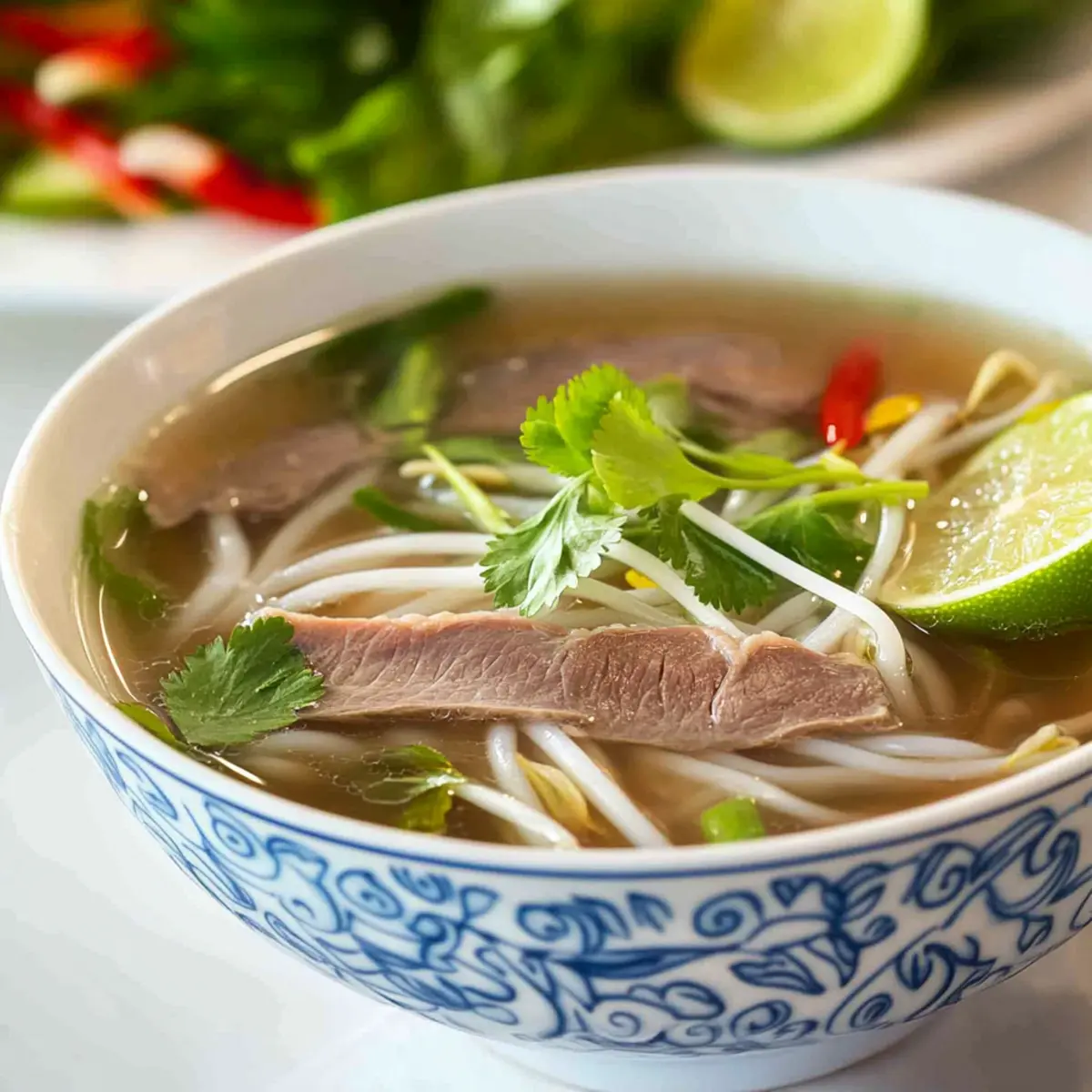
Why is Pho Soup the Ultimate Comfort Food?
Aromatics Galore: Cooking pho fills your kitchen with enticing spices like star anise and cinnamon, making it irresistible.
Heartwarming Broth: The slow-simmered broth is not just nourishing; it’s a hug in a bowl, perfect for any chilly night.
Customizable Deliciousness: Top your pho with fresh herbs and garnishes, allowing everyone to personalize their experience. Try it with some Breakfast Egg Muffins on the side, too!
Quick to Prep: Though it takes time to simmer, the active preparation is minimal, allowing you to multitask.
Family-Friendly: With its delightful flavors, even the pickiest eaters will enjoy this dish. Plus, it’s a wonderful way to introduce traditional Vietnamese cuisine to your loved ones!
Pho Soup Recipe Ingredients
For your Authentic Homemade Vietnamese Pho Soup, gather these fresh ingredients to create that comforting flavor!
Advertisement
For the Broth
• Beef Knuckles or Leg Bones – Essential for a rich, flavorful broth; substitute with a mix of marrow and neck bones if desired.
• Cold Water – Used to extract flavors during the long simmer.
• Onions (2, quartered) – Adds sweetness and depth; char for an extra smoky note.
• Fresh Ginger (4-inch piece, halved) – Brings warmth; charred to enhance its flavor profile.
• Cinnamon Sticks (2) – Provides warmth; omit if you’re allergic to cinnamon.
• Coriander Seeds (1 tablespoon) – Adds a floral note; can be substituted with ground cumin if needed.
• Fennel Seeds (1 tablespoon) – Imparts sweetness; anise can replace it in a pinch.
• Star Anise (6 whole) – Essential for that distinct pho flavor; remove for a milder broth.
• Cloves (6 whole) – Adds warmth; you can reduce for a less intense taste.
• Black Cardamom Pod (1) – Offers a smoky essence; if unavailable, regular cardamom can stand in.
• Fine Sea Salt (1½ tablespoons) – Enhances all flavors; adjust depending on your taste preferences.
• Fish Sauce (¼ cup) – Key for authentic flavor; opt for tamari if gluten-free is needed.
• Rock Sugar (1-inch piece) – Balances the broth beautifully; regular sugar can substitute if necessary.
For the Pho
• Rice Noodles (1 pound) – Flat ‘banh pho’ noodles; both fresh and dried versions work wonderfully.
• Raw Beef (8 ounces, thinly sliced) – Traditionally eye of round or sirloin; feel free to omit for a vegetarian option.
• Thinly Sliced Onions (¼ cup) – Garnish for aromatic goodness.
• Chopped Cilantro Leaves (¼ cup) – Fresh herbs for garnish; can be swapped with green onions.
Optional Toppings
• Fresh Mint – For an added refreshing flavor.
• Thai Basil – A classic pho accompaniment.
• Bean Sprouts – Provides a delightful crunch.
• Lime Wedges – A splash of citrus brightens the dish.
• Sliced Chilies – For those who enjoy some heat!
• Fish Sauce, Hoisin Sauce, Sriracha – For extra flavor and customization to each bowl.
This pho soup recipe is all about the layers of flavor, so gather these ingredients and let’s dive into creating a bowl of warmth that everyone will love!
Step‑by‑Step Instructions for Pho Soup Recipe
Step 1: Prepare the Broth
Begin by placing your beef knuckles or leg bones in a large pot and cover them with water. Bring to a boil over high heat and let it boil for 3–5 minutes to remove any scum. Drain and rinse the bones, then return them to the pot with 6 quarts of cold water, setting the stage for the deeply flavored broth.
Step 2: Char the Aromatics
While your bones are simmering, prepare the aromatics. Place the quartered onions and halved ginger under the broiler for 10–15 minutes, turning halfway through until they are caramelized and slightly charred. This step enhances the smoky depth of your pho soup recipe, adding layers of flavor to the broth.
Step 3: Toast the Spices
In a dry skillet, toast the cinnamon sticks, coriander seeds, fennel seeds, star anise, cloves, and black cardamom over medium heat for about 5 minutes. Stir frequently until the spices are fragrant, taking care not to burn them. Once done, transfer the toasted spices into a cheesecloth or spice bag for easy removal later.
Step 4: Simmer the Broth
With everything prepared, bring the pot of cold water and bones to a boil over high heat. Once boiling, reduce to a gentle simmer. Add the charred aromatics, the spice bag, fine sea salt, fish sauce, and a piece of rock sugar. Let this simmer uncovered for at least 3 hours, allowing the flavors to meld beautifully.
Step 5: Strain the Broth
After simmering, carefully remove the bones and aromatics from the pot using a slotted spoon. Strain the broth through a fine-mesh sieve or cheesecloth to achieve a clear broth. This step ensures that your pho soup recipe is not only flavorful but also visually appealing with its crystal-clear liquid.
Step 6: Cook the Rice Noodles
While your broth continues to simmer, prepare the rice noodles. Soak the dried rice noodles in hot water for about 20 minutes until softened, then drain. Bring a large pot of water to a boil and briefly boil the soaked noodles for about 1–2 minutes. This will ensure they are perfectly tender and ready for your pho.
Step 7: Assemble the Pho
To serve, place a portion of the cooked rice noodles into each bowl. Top with thinly sliced raw beef, which will cook gently when the hot broth is ladled over it. Pour the simmering broth over the noodles and beef, filling the bowls to the brim with that aromatic, vibrant flavor of homemade pho soup.
Step 8: Garnish and Serve
Finally, garnish your bowls of pho with thinly sliced onions and freshly chopped cilantro. Invite your guests to customize their bowls with optional toppings like fresh mint, Thai basil, bean sprouts, lime wedges, and sliced chilies. Serve immediately and witness the joy this comforting pho soup recipe brings to your loved ones.
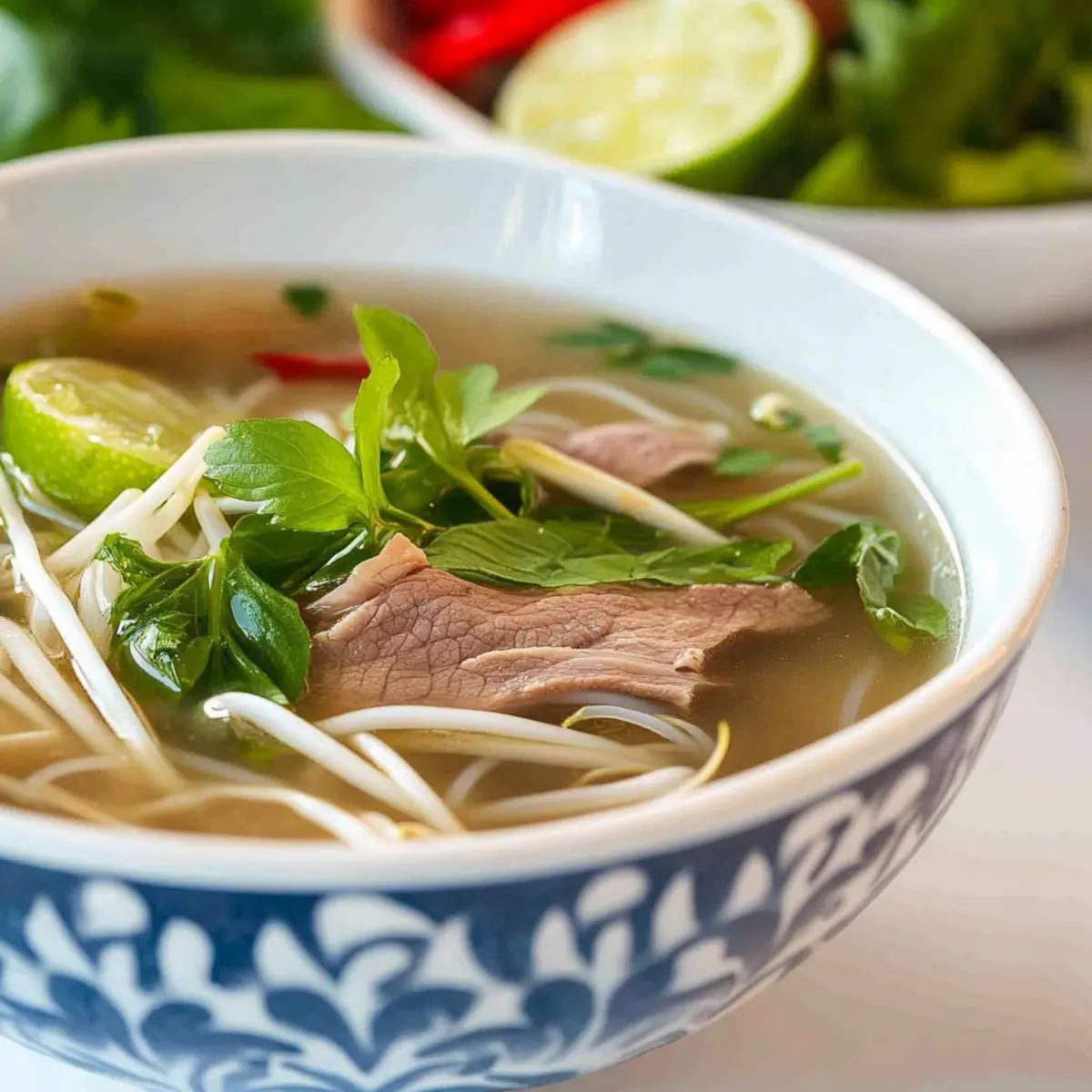
Pho Soup Recipe Variations & Substitutions
Feel free to get creative with this recipe and make it your own in delightful ways!
-
Chicken Pho: Substitute beef with chicken thighs for a lighter broth that’s just as comforting.
-
Tofu Twist: For a vegetarian option, replace the raw beef with tofu—the perfect balance of protein and texture! Enjoy how the tofu absorbs all those rich flavors.
-
Gluten-Free Noodles: Use gluten-free rice noodles to accommodate dietary restrictions, ensuring everyone can enjoy a warm bowl of pho.
-
Spicy Kick: Add chili flakes or sliced jalapeños to amp up the heat in your broth. It’s easy to customize based on how fiery you want your pho.
-
Herb Variations: Swap out cilantro for fresh basil or mint—each herb brings its own unique flavor, elevating your dish.
-
Veggie Broth Base: Substitute the beef broth with vegetable broth for a lighter, plant-based option while still maintaining all those delightful flavors!
-
Coconut Milk Addition: For a creamy twist, add a splash of coconut milk to your broth—this will bring in an exotic touch.
-
Extra Crunch: Top with crushed peanuts or fried onions to add an interesting texture contrast to your pho. Get ready for that delightful crunch with every bite!
Whether you’re enjoying this dish alone or sharing it with family and friends, don’t miss out on featuring some incredible Stovetop Ground Beef or even using leftovers from your Hamburger Potato Casserole! Each variation makes this pho soup recipe a comforting classic for every occasion.
Helpful Tricks for Pho Soup Recipe
• Quality Bones: Use fresh beef knuckles or leg bones for a rich broth; avoid processed or pre-packaged options to maximize flavor.
• Slow Simmer: Let the broth simmer for 3 hours for depth; rushing it will yield a flat taste and lack of aroma.
• Charred Aromatics: Don’t skip charring the onions and ginger; this step enhances the broth’s smokiness and complexity.
• Taste Test: Adjust salt and fish sauce at the end of cooking; flavors develop over time, so taste before serving for the best pho soup recipe.
• Clear Broth: Strain the broth thoroughly to remove impurities; a clear broth is visually appealing and makes for a lovely presentation.
Make Ahead Options
Preparing Homemade Vietnamese Pho Soup ahead of time is a fantastic strategy for busy cooks seeking to save time without compromising on quality. You can make the broth and refrigerate it for up to 3 days or freeze it for up to 3 months. Simply follow the broth preparation steps and let it cool before transferring it to airtight containers. For the rice noodles, soak them in hot water ahead of time and refrigerate (in a sealed container) for up to 24 hours. When you’re ready to serve, simply reheat the broth until piping hot, briefly boil the noodles, and assemble your pho soup recipe with fresh toppings. This way, you can enjoy a delightful bowl of pho soup with minimal effort any night of the week!
What to Serve with Homemade Vietnamese Pho
Warm your heart and please your palate by pairing delightful side dishes and beverages with your fragrant bowl of Vietnamese noodle goodness.
- Fresh Spring Rolls: Light and crunchy, these rolls filled with shrimp or vegetables complement the rich broth beautifully. Great for a refreshing textural contrast!
- Chili Lime Rice: Simple yet flavorful, this zesty rice adds a nice kick and absorbs the aromatic flavors of the pho, enhancing each bite.
- Crispy Fried Tofu: Perfect for a vegetarian option, crispy tofu brings added protein and texture, absorbing the savory goodness of your broth.
- Vietnamese Iced Coffee: The bold flavor of this sweetened coffee pairs perfectly post-meal, providing that much-needed caffeine boost while complementing the meal’s richness.
- Grilled Lemongrass Chicken: The aromatic and slightly smoky flavor of lemongrass chicken matches beautifully with pho, lending a delightful twist to the experience.
- Sautéed Bok Choy: This light and fresh side adds a burst of greens and a soft crunch, balancing the warmth of the broth with a hint of sweetness.
- Fruit Sorbet: A light and refreshing dessert to cleanse your palate, sorbet’s fruity notes are a perfect way to end a hearty bowl of pho.
- Pineapple Fried Rice: Slightly sweet and savory, this dish can offer a delightful balance to the traditional flavors of pho, enriching your meal experience.
- Coconut Water: Hydrating and slightly sweet, this drink refreshes after enjoying the robust flavors of pho, making it an excellent choice to sip alongside your meal.
Storage Tips for Pho Soup Recipe
Fridge: Store leftover broth in an airtight container in the fridge for up to 4 days to maintain freshness and flavor.
Freezer: For longer storage, freeze broth in portions for up to 3 months. Use freezer bags or containers, leaving space for expansion.
Reheating: Reheat pho broth on the stovetop or in the microwave until piping hot. For the best taste, add fresh noodles and toppings just before serving.
Leftover Noodles: Store cooked rice noodles separately in the fridge for up to 2 days, but they may become mushy. Reheat quickly in boiling water to restore their texture.
Homemade Vietnamese Pho Recipe FAQs
How do I choose the best beef bones for the pho broth?
Absolutely! For a rich, flavorful broth, opt for fresh beef knuckles or leg bones. These parts provide deep flavor and gelatinous richness. Avoid pre-packaged or processed bones, as they can lack the quality you want in your broth. If you’re having trouble finding those, a mix of marrow and neck bones can also work beautifully as a substitute.
What’s the best way to store leftover pho broth?
Very good question! Store your leftover broth in an airtight container in the fridge for up to 4 days. This will keep it fresh and flavorful for another warm bowl of pho. If you want to save it for an even longer period, freeze the broth in portions using freezer bags or containers for up to 3 months. Just remember to leave some space at the top for expansion!
Can I freeze cooked rice noodles?
While it’s best to freeze the broth rather than the noodles, if you have to freeze cooked rice noodles, store them separately in an airtight container in the fridge for up to 2 days. The noodles may become mushy after freezing, so if you do freeze them, reheat quickly in boiling water to restore their texture before serving them with your broth!
What if my broth taste is too strong or too weak?
No worries! Balancing the flavors in your broth is key. If the broth tastes too strong, you can dilute it with a bit of water and adjust the seasoning. Conversely, for a weaker flavor, simmer your broth uncovered a bit longer to concentrate the flavors. Always taste and adjust salt and fish sauce at the end of cooking for the best flavor profile in your pho soup recipe!
Are there any dietary considerations I should keep in mind?
Of course! If you’re serving pho to guests, be sure to ask about allergies—like allergies to fish sauce or spices like star anise or cinnamon. For a vegetarian pho, you can switch to vegetable broth, omit the beef, and add tofu instead. Just remember to use gluten-free rice noodles if necessary for gluten sensitivities!
How long does the broth need to simmer for optimal flavor?
Absolutely essential! Simmer your broth uncovered for at least 3 hours. This allows all the complex flavors to meld beautifully. Rushing the simmering process can lead to a flat taste and lack of aroma, so take your time to create a rich, fragrant broth that warms the soul.
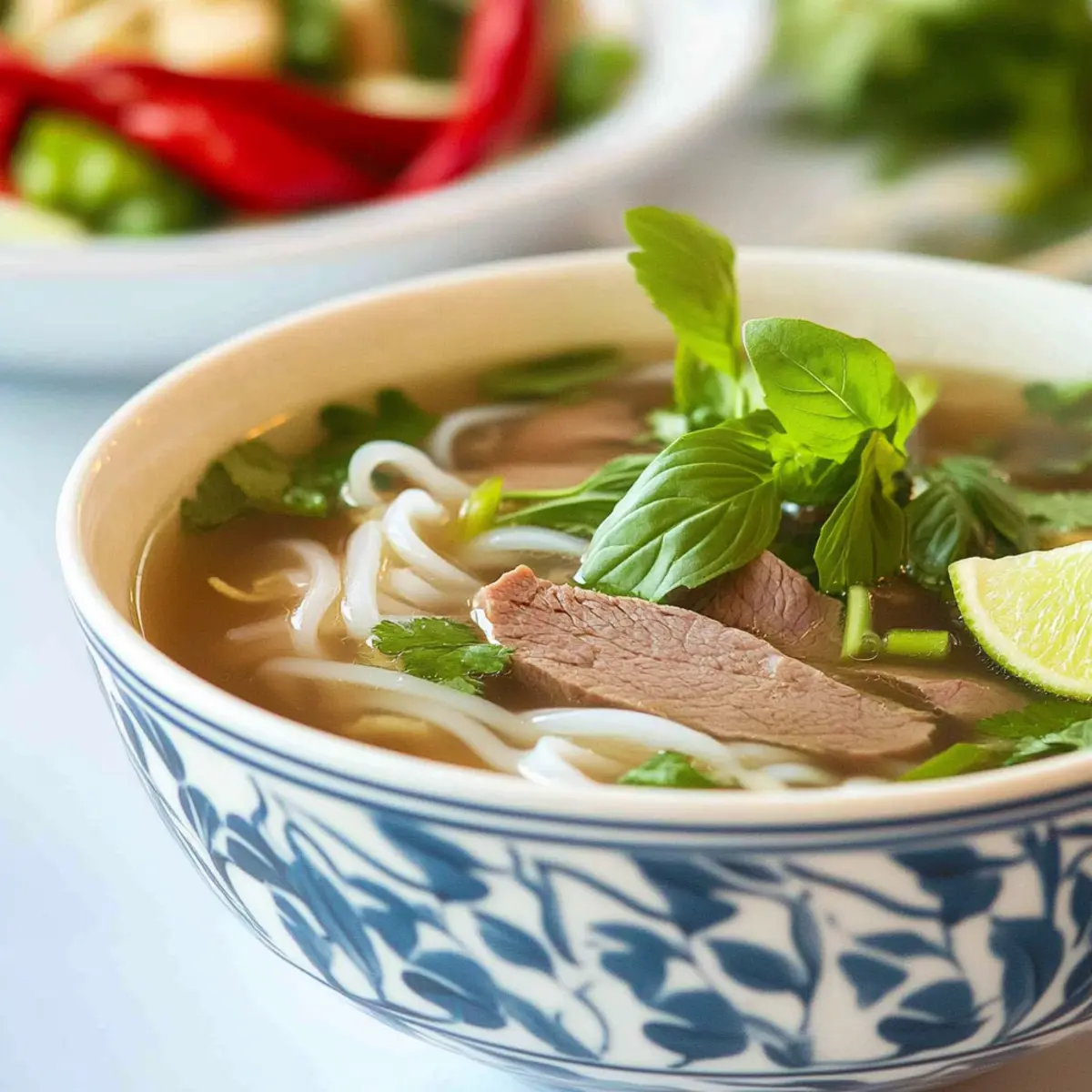
The Best Pho Soup Recipe You'll Love to Savor at Home
Ingredients
Equipment
Method
- Begin by placing your beef knuckles or leg bones in a large pot and cover with water. Bring to a boil over high heat and boil for 3–5 minutes to remove scum. Drain and rinse the bones, then return to the pot with cold water.
- Char the quartered onions and halved ginger under the broiler for 10–15 minutes, turning halfway through until caramelized. This enhances the smoky depth of flavor.
- Toast the cinnamon sticks, coriander seeds, fennel seeds, star anise, cloves, and black cardamom in a dry skillet over medium heat for about 5 minutes until fragrant.
- With everything prepared, bring the pot of cold water and bones to a boil. Reduce to a gentle simmer and add charred aromatics, spice bag, fine sea salt, fish sauce, and rock sugar. Let simmer uncovered for at least 3 hours.
- Carefully remove bones and aromatics using a slotted spoon. Strain the broth through a fine-mesh sieve or cheesecloth to achieve a clear broth.
- Soak dried rice noodles in hot water for about 20 minutes until softened, then drain. Bring a pot of water to a boil and briefly boil the soaked noodles for 1–2 minutes.
- To serve, place a portion of the cooked rice noodles into each bowl. Top with thinly sliced raw beef, which will cook gently when the hot broth is ladled over it.
- Garnish bowls of pho with thinly sliced onions and freshly chopped cilantro. Invite guests to customize with optional toppings. Serve immediately.