Advertisement
As I carefully sliced through the tough skin of a spaghetti squash, I was hit with the aroma of earthy sweetness wafting into the air. This humble veggie is more than just a low-carb alternative; it’s a blank canvas ready for your culinary creativity. Perfectly Roasted Spaghetti Squash not only serves as a guilt-free side dish, but it also packs a nutritious punch that everyone will love. Whether you’re looking to impress guests or simply want a satisfying meal without the carbs, this dish is sure to become a staple in your kitchen. With minimal prep and endless possibilities for toppings, it’s a fantastic way to bring something wholesome to the table. Are you ready to discover how delicious healthy can taste?

Why is Spaghetti Squash a Game Changer?
Versatile Base: Spaghetti squash can easily transform from a simple side to the star of your dinner plate. Pair it with marinara, pesto, or creamy Alfredo for a satisfying low-carb meal that’s sure to please.
Health Boost: This low-calorie, nutrient-dense option supports your healthy eating goals without sacrificing flavor.
Advertisement
Quick and Easy: With straightforward preparation, you’ll have a delicious dish ready in no time—perfect for busy weeknights or impromptu gatherings.
Crowd-Pleasing: Impress your friends or family as they marvel at this unique pasta alternative. Everyone will love this healthy twist on a classic!
Meal Prep Friendly: Cook it ahead of time and store it in the fridge. It holds up beautifully for quick meals throughout the week, making it a perfect candidate for your next batch cooking session!
Spaghetti Squash Ingredients
Here’s what you’ll need for the perfect roasted spaghetti squash.
For the Squash
• Medium Spaghetti Squash – The star ingredient that mimics pasta when roasted; look for one that feels heavy and has no soft spots.
For the Seasoning
• Extra-virgin Olive Oil – Adds richness and aids in roasting; feel free to substitute with melted butter or coconut oil for a distinct flavor.
• Kosher Salt – Enhances flavor beautifully; regular table salt can suffice, but adjust the quantity due to its finer grain.
• Freshly Ground Black Pepper – Provides essential seasoning for that well-rounded taste; you can use white pepper for a milder kick.
Now that you have everything ready, you’re one step closer to enjoying a delightful low-carb dish that tantalizes the taste buds!
Step‑by‑Step Instructions for Perfectly Roasted Spaghetti Squash
Step 1: Preheat the Oven
Begin by preheating your oven to 400°F (200°C). This high temperature is ideal for roasting the spaghetti squash, allowing it to caramelize while achieving that perfect tender texture. Gather your baking sheet, parchment paper (optional), and a sharp knife for the next steps.
Step 2: Prepare the Squash
Carefully slice the spaghetti squash in half lengthwise. Use the sharp knife to cut through the tough outer skin, taking caution as you do so. Once halved, use a spoon to scoop out the seeds from the center, setting them aside if you wish to roast them later.
Step 3: Season the Squash
Drizzle the cut sides of the spaghetti squash with extra-virgin olive oil, ensuring an even coating for optimal roasting. Generously sprinkle with kosher salt and freshly ground black pepper to enhance the flavor. The oil helps to brown the squash while enhancing its natural sweetness during roasting.
Step 4: Roast the Squash
Place the squash halves cut side down on a baking sheet lined with parchment paper. Slide the sheet into the preheated oven and roast for 40 minutes. Keep an eye on your spaghetti squash; it should soften and its skin will become slightly browned when done.
Step 5: Check Doneness
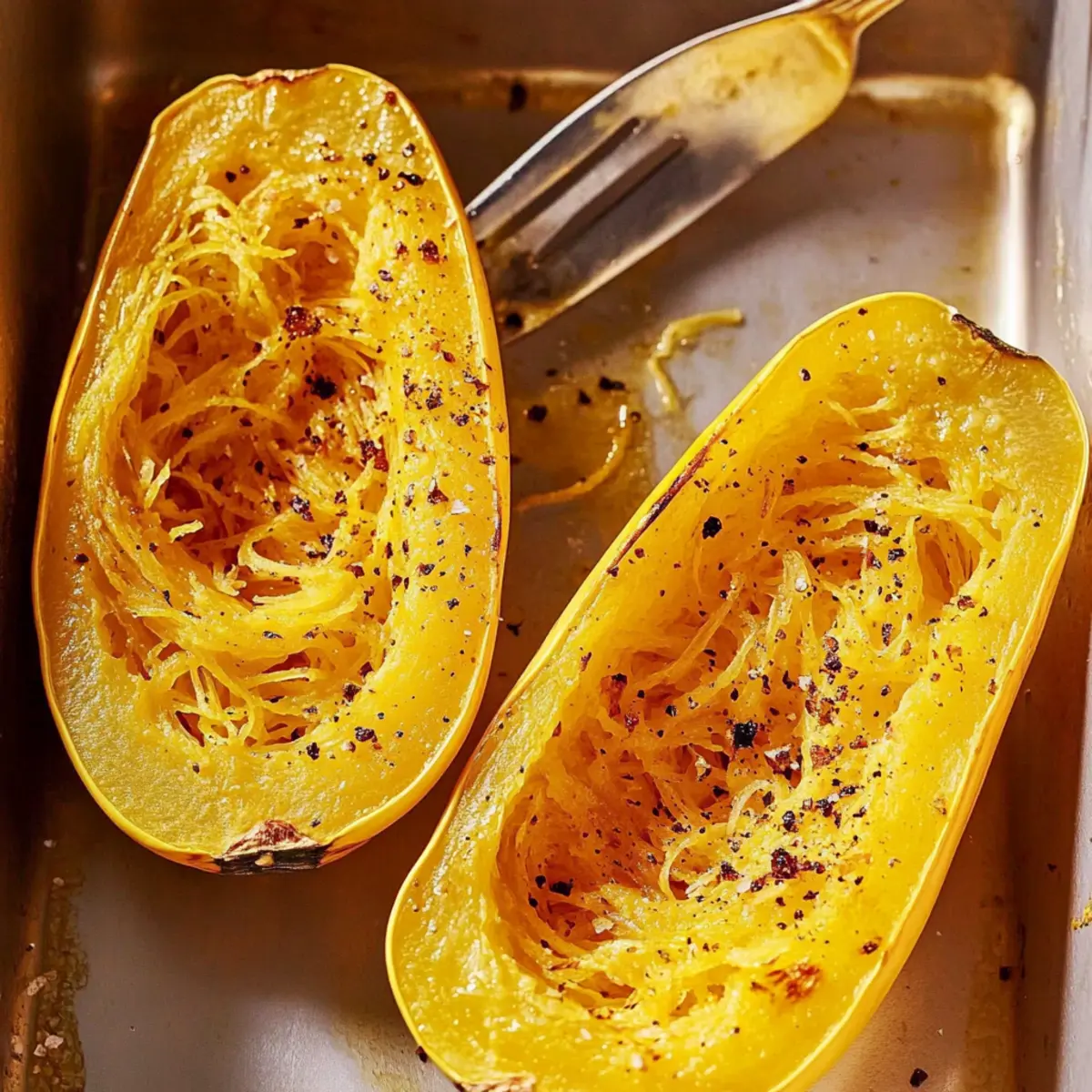
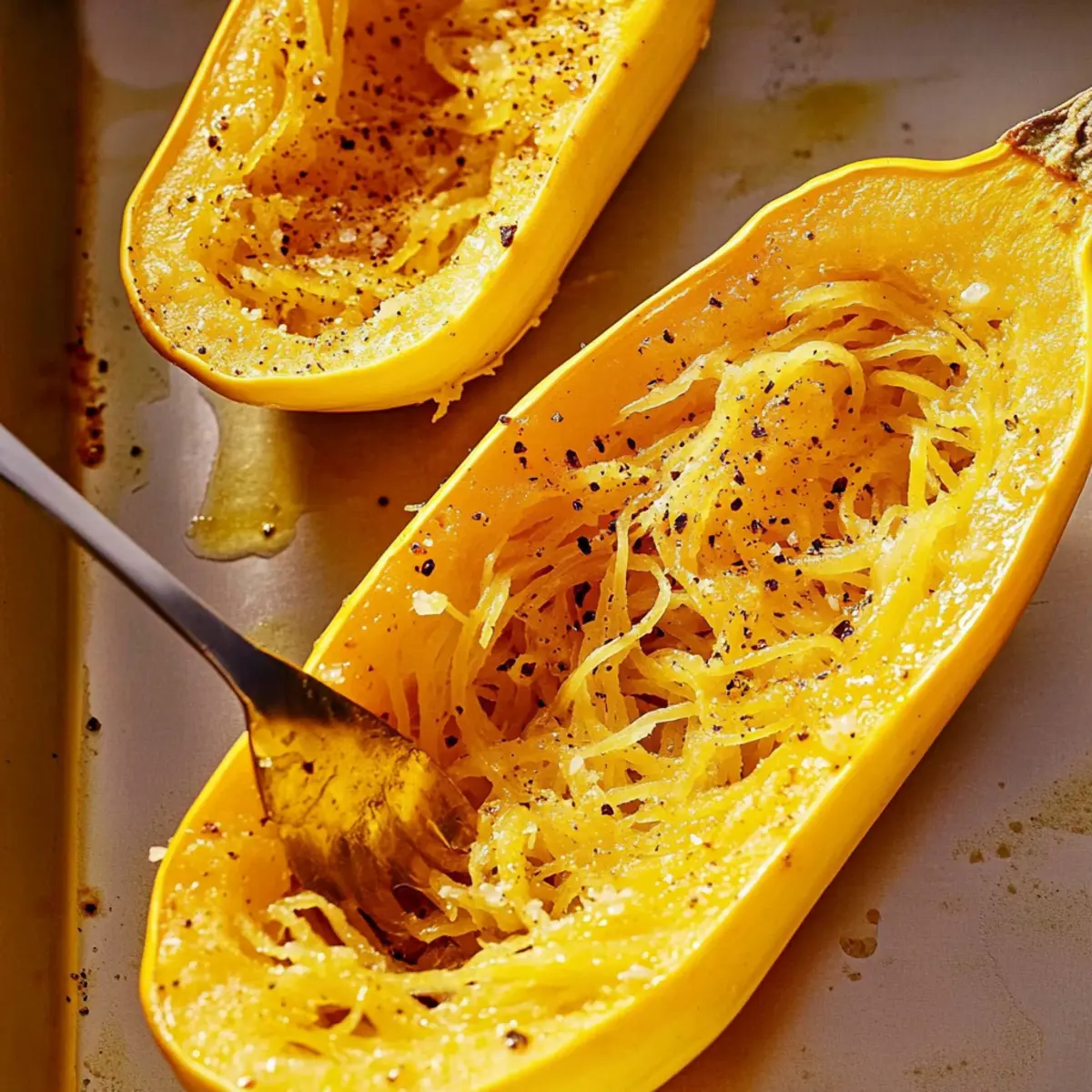
After 40 minutes, carefully turn one half of the spaghetti squash over to check its doneness. Using a fork, gently scrape the flesh; it should easily separate into spaghetti-like strands. If needed, return it to the oven for an additional 5-10 minutes until tender.
Step 6: Finish and Serve
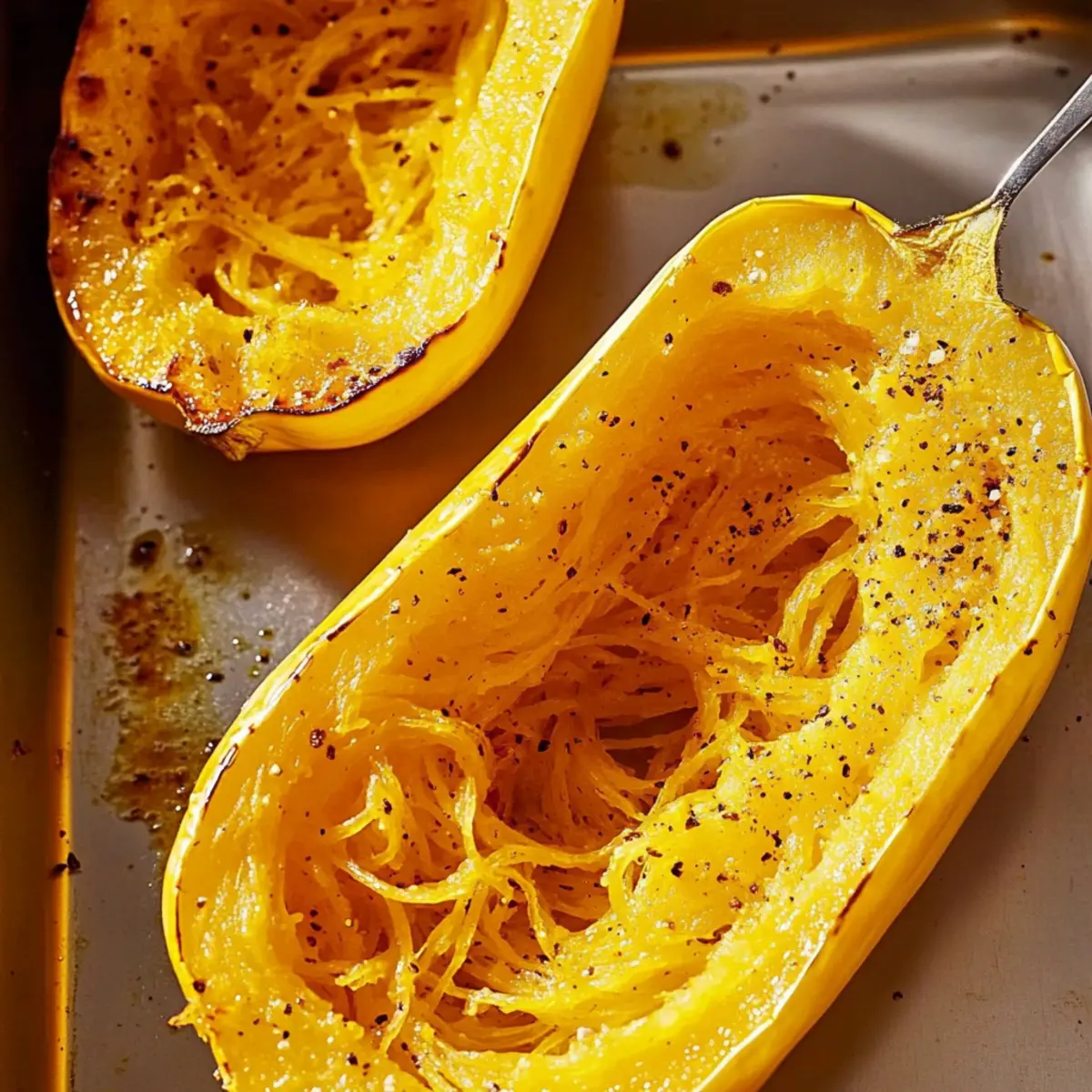
Once cooked to perfection, remove the squash from the oven and flip the halves cut side up. To elevate the flavor, add a pat of butter into each half and allow it to melt. Use a fork to scrape and separate the flesh into long, spaghetti-like strands ready to serve with your favorite sauces or toppings.
What to Serve with Perfectly Roasted Spaghetti Squash
As you prepare to savor the delightful flavors of roasted spaghetti squash, it’s time to think about companion dishes that will elevate your meal experience.
-
Garlicky Green Beans: These vibrant green beans offer a crisp texture and a bright pop of flavor that balances the squash’s mildness beautifully. A sprinkle of garlic enhances every bite!
-
Savory Herb Chicken: Juicy, herb-marinated chicken is an ideal protein to pair with spaghetti squash. Its savory flavors create a hearty contrast that will leave everyone wanting more.
-
Mediterranean Quinoa Salad: Refreshing and wholesome, this salad features tomatoes, cucumber, and feta. The grains and fresh veggies add contrasting textures and a lively burst of flavor alongside the tender squash.
-
Creamy Mushroom Sauce: This earthy sauce drizzled over the squash provides a rich and creamy contrast that makes the dish richer and more comforting. Perfect for a cozy dinner!
-
Roasted Brussels Sprouts: These caramelized bites bring a delightful crunch, enhancing the overall meal’s texture. Their slight bitterness complements the squash’s sweetness wonderfully.
-
Red Wine: A glass of medium-bodied red wine can boost your meal’s flavor profile. Its fruity notes will harmonize with the squash and any savory counterparts beautifully.
-
Chilled Lemonade: Looking for a refreshing drink? A glass of chilled lemonade adds a zesty sparkle that counterbalances the warmth of the roasted squash, making every bite even more enjoyable.
Helpful Tricks for Spaghetti Squash
Stable Cutting: Use a damp towel under the cutting board to prevent slipping when slicing the spaghetti squash. Safety first!
Avoid Sogginess: Keep an eye on the squash while roasting to prevent overcooking, which can lead to undesirable sogginess.
Save Seeds: Don’t discard the seeds! Roast them with a pinch of salt and chili powder for a tasty snack that’s rich in nutrients.
Optimal Serving: Fluff the strands gently with a fork to maintain their texture and allow them to soak up your favorite sauce beautifully.
Storage Tips: Store any leftover spaghetti squash in an airtight container in the refrigerator for up to 5 days, making healthy meals convenient all week long.
Spaghetti Squash Variations & Substitutions
Feel free to get creative and customize your spaghetti squash dish with these fun twists!
-
Dairy-Free: Substitute the butter with a plant-based alternative to keep it vegan-friendly while retaining a rich flavor.
You can also experiment with coconut cream, adding a hint of sweetness that complements the squash’s natural taste. -
Spicy Kick: Sprinkle in some red pepper flakes or add diced jalapeños before roasting for a delightful heat.
This little touch can elevate your dish to a whole new level of excitement, perfect for spice lovers! -
Herb-Infused: Try adding fresh herbs like thyme or rosemary to the olive oil drizzle before roasting.
The fragrant aroma during cooking will fill your kitchen, making it an irresistible dish full of fresh flavor. -
Cheesy Goodness: Finish your spaghetti squash with a sprinkle of Parmesan or nutritional yeast for a cheesy twist.
This adds a savory depth that pairs beautifully with any sauce and keeps your dish satisfying! -
Flavor Boost: Mix in garlic powder or smoked paprika with the oil before seasoning your squash.
It’s a simple way to introduce a depth of flavor that transforms your dish into a gourmet experience! -
Nutty Finish: Top your spaghetti squash with toasted pine nuts or chopped walnuts for added crunch and healthy fats.
This extra texture will not only bring joy to your palate but also boost the nutritional profile of your meal. -
Saucy Dreams: Pair your roasted spaghetti squash with homemade marinara or a creamy Alfredo sauce, or try a zesty lemon-butter sauce.
Each sauce brings a different flair—making it a delightful base that can adapt to any craving! -
Hearty Enhancements: Add sautéed mushrooms and fresh spinach to create a hearty main dish, perfect for hungry family members.
This can turn a simple side into a comforting and filling meal brimming with nutrients!
By embracing these variations, you can keep your spaghetti squash nights exciting and flavorful—discovering new favorites with each delicious bite!
How to Store and Freeze Spaghetti Squash
Fridge: Store cooked spaghetti squash in an airtight container for up to 5 days. Make sure it’s completely cooled before sealing to maintain freshness.
Freezer: To freeze, portion the cooked strands into freezer bags or containers, removing excess air. It can be stored for up to 2 months without losing quality.
Reheating: Reheat in the microwave or on the stovetop with a splash of water to prevent drying out, heating until warmed through. Enjoy this versatile spaghetti squash again as a quick, healthy meal!
Make-Ahead Tips: Prepare spaghetti squash ahead of time; it holds up wonderfully in the fridge or freezer, making it perfect for meal prep!
Make Ahead Options
These roasted spaghetti squash are perfect for meal prep enthusiasts! You can prepare the squash up to 24 hours in advance by roasting it ahead of time, then allowing it to cool completely before storing it in an airtight container in the refrigerator. To maintain the best quality, be sure to keep the squash cut side up to prevent browning. When you’re ready to serve, simply reheat the spaghetti squash in the microwave or oven until warmed through, and then scrape the strands apart with a fork. This method ensures that you can enjoy a wholesome, low-carb meal with minimal effort on busy weeknights!
Roasted Spaghetti Squash Recipe FAQs
How do I know if my spaghetti squash is ripe?
Absolutely! When selecting a spaghetti squash, look for one that feels heavy for its size. The skin should be firm with a matte finish and free from dark spots or blemishes. If you gently press on the skin and it yields easily, it may not be ripe enough.
What’s the best way to store cooked spaghetti squash?
To store cooked spaghetti squash, place it in an airtight container in the refrigerator where it will stay fresh for up to 5 days. Be sure to let it cool completely before sealing to prevent condensation from forming, which can make it soggy.
Can I freeze spaghetti squash?
Yes! To freeze your cooked spaghetti squash, allow it to cool completely, then portion the strands into freezer-safe bags or containers. Be sure to remove as much air as possible before sealing. It can be frozen for up to 2 months, maintaining quality as long as it’s well-packed.
What should I do if my spaghetti squash is too tough to cut?
Very often, if you’re struggling to cut through the spaghetti squash, try microwaving it for 3-5 minutes first—this will soften the skin slightly, making it easier to slice. Additionally, you can place the entire squash in the oven at 350°F (175°C) for about 10-15 minutes, then let it cool for a bit before cutting, which should help!
Can my pet eat spaghetti squash?
Absolutely! Spaghetti squash is safe for dogs and cats in moderation. Just make sure it’s cooked and free from any oils, seasonings, or sauces. Avoid giving them the seeds as they can pose a choking hazard.
What if my spaghetti squash turns out soggy?
If your roasted spaghetti squash turns out soggy, this often occurs from overcooking or from it being stored incorrectly after cooking. Make sure to keep an eye on it while roasting and take it out once the flesh is tender but not mushy. For future batches, try reducing the roasting time slightly or flipping it to check doneness sooner. You can also consider serving it on a bed of fresh herbs to absorb excess moisture.
Roasted Spaghetti Squash: A Healthy Twist on Pasta Night
Ingredients
Equipment
Method
- Preheat your oven to 400°F (200°C).
- Carefully slice the spaghetti squash in half lengthwise and scoop out the seeds.
- Drizzle the cut sides with olive oil and sprinkle with salt and pepper.
- Place the squash halves cut side down on a baking sheet and roast for 40 minutes.
- Check doneness by scraping the flesh; it should easily separate into strands.
- Remove from oven, add a pat of butter, and separate the flesh into strands.