Advertisement
As I stood at the stove, the aromatic scent of sautéed vegetables began to weave through my kitchen, instantly lifting my spirits. Japchae, a beloved Korean classic, effortlessly brings a touch of vibrancy and warmth to any meal. This versatile sweet potato noodle stir-fry adapts beautifully to your pantry staples, whether you choose tender beef, succulent chicken, or delightful tofu as your protein. With its gluten-free noodles and abundant fresh vegetables, Japchae not only promises a nutritious dinner option but also caters to a variety of dietary preferences, making it a true crowd-pleaser. Plus, it can be prepped ahead of time, freeing you to savor those special moments with loved ones. Ready to explore the enticing world of Japchae? Let’s dive in!
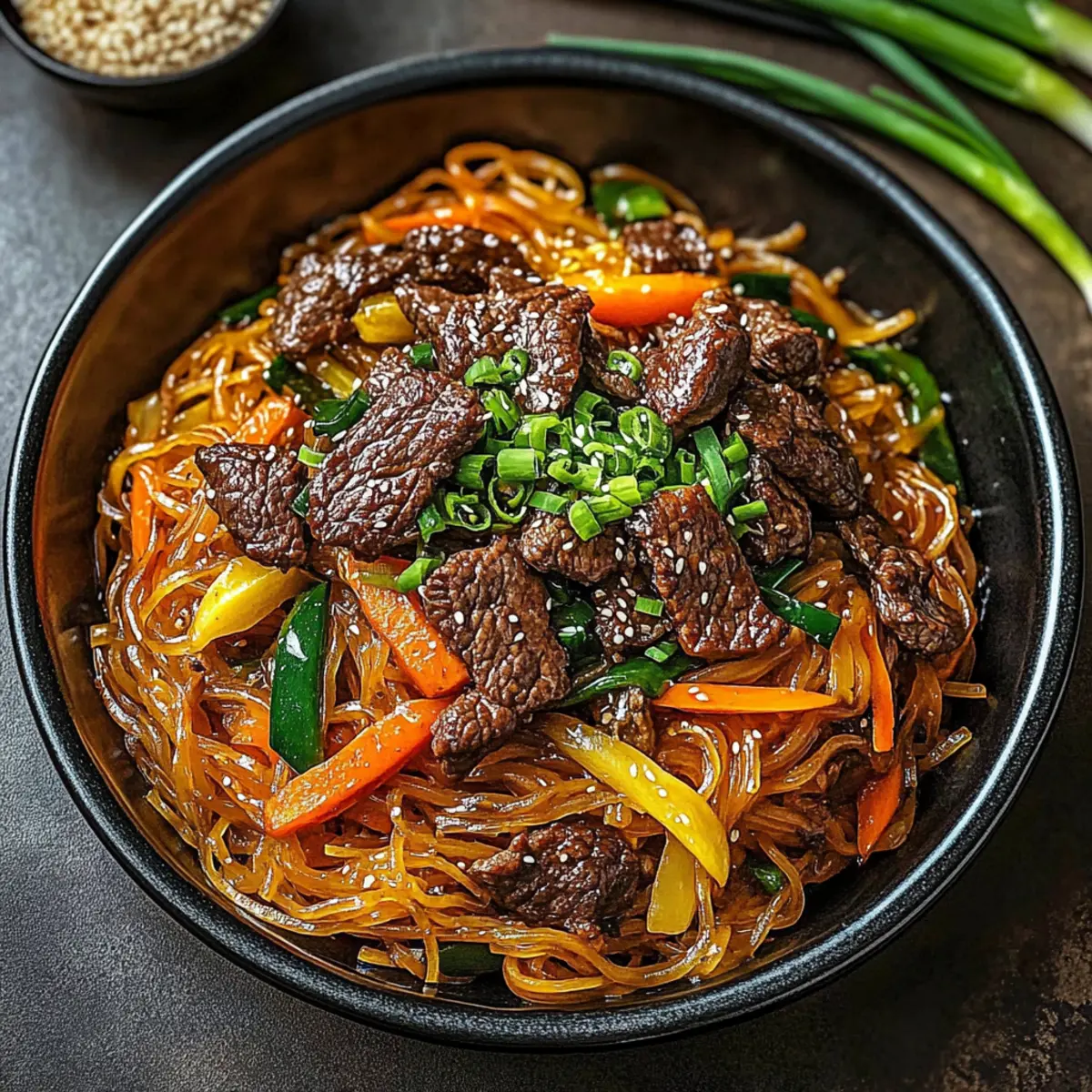
Why is Japchae a Must-Try Dish?
Versatile and Customizable: With the ability to swap proteins like beef, chicken, or tofu, Japchae caters to every palate and dietary need.
Nutritious and Flavorful: Packed with vibrant vegetables and sweet potato noodles, it’s both wholesome and delicious.
Quick and Simple: The recipe is straightforward, making it perfect for weeknight dinners or entertaining guests.
A Crowd Favorite: Regardless of your guests’ tastes, Japchae’s sweet-savory profile and unique texture appeal to all, ensuring no leftovers!
Make-Ahead Convenience: Prepare it in advance for busy days; it tastes even better the next day! Ready to dive deeper into the world of Korean dishes? You’ll be glad you did!
Japchae Ingredients
For the Noodles
• Sweet Potato Glass Noodles – The heart of Japchae; they provide a distinctive chewy texture.
Advertisement
For the Protein
• Beef (or Chicken/Tofu) – Adds richness to the dish; swap for tofu to keep it vegetarian-friendly.
For the Vegetables
• Mixed Vegetables (carrots, bell peppers, spinach) – Loads of color and crunch; choose seasonal veggies for the freshest taste.
For the Sauce
• Soy Sauce – Brings umami flavor that elevates the dish; opt for low-sodium to keep it lighter.
• Sesame Oil – Also enhances flavor with its nutty aroma; olive oil may be used in a pinch if needed.
For Garnish
• Green Onions – A sprinkle adds freshness and visual appeal; can be replaced with chives if you’re out.
Now that you have everything, prepare to create a delicious Japchae that dazzles!
Step‑by‑Step Instructions for Japchae
Step 1: Prep the Noodles
Begin by soaking the sweet potato glass noodles in a large bowl of hot water. Let them soak for about 20-30 minutes until they soften. You’ll know they’re ready when they’re pliable and slightly translucent. Once softened, drain the noodles and set them aside to cool while you prepare the other ingredients.
Step 2: Cook the Protein
In a large skillet or wok, heat a tablespoon of oil over medium-high heat. Add your sliced beef (or chicken/tofu) and cook for 3-5 minutes, stirring frequently until the protein is browned and cooked through. Remove the cooked protein from the skillet and set it aside, leaving any flavorful juices behind.
Step 3: Stir-Fry the Vegetables
Using the same skillet, add a little more oil if needed, and toss in a mix of colorful vegetables like carrots, bell peppers, and spinach. Stir-fry for about 4-5 minutes until the vegetables are tender yet still crisp, appearing vibrant in color. This will enhance their flavors and create a lovely base for the Japchae.
Step 4: Combine Ingredients
Return the cooked sweet potato noodles and protein to the skillet with the stir-fried vegetables. Pour in your desired amount of soy sauce and sesame oil, tossing everything together gently but thoroughly. Cook for an additional 2-3 minutes, allowing the noodles to really soak up those savory flavors while everything heats through.
Step 5: Serve
Once combined, remove the skillet from the heat. Transfer the fragrant Japchae to a serving platter and garnish with chopped green onions for an added fresh touch. Serve warm, enjoying the delightful mix of textures and flavors that make Japchae such a beloved dish.
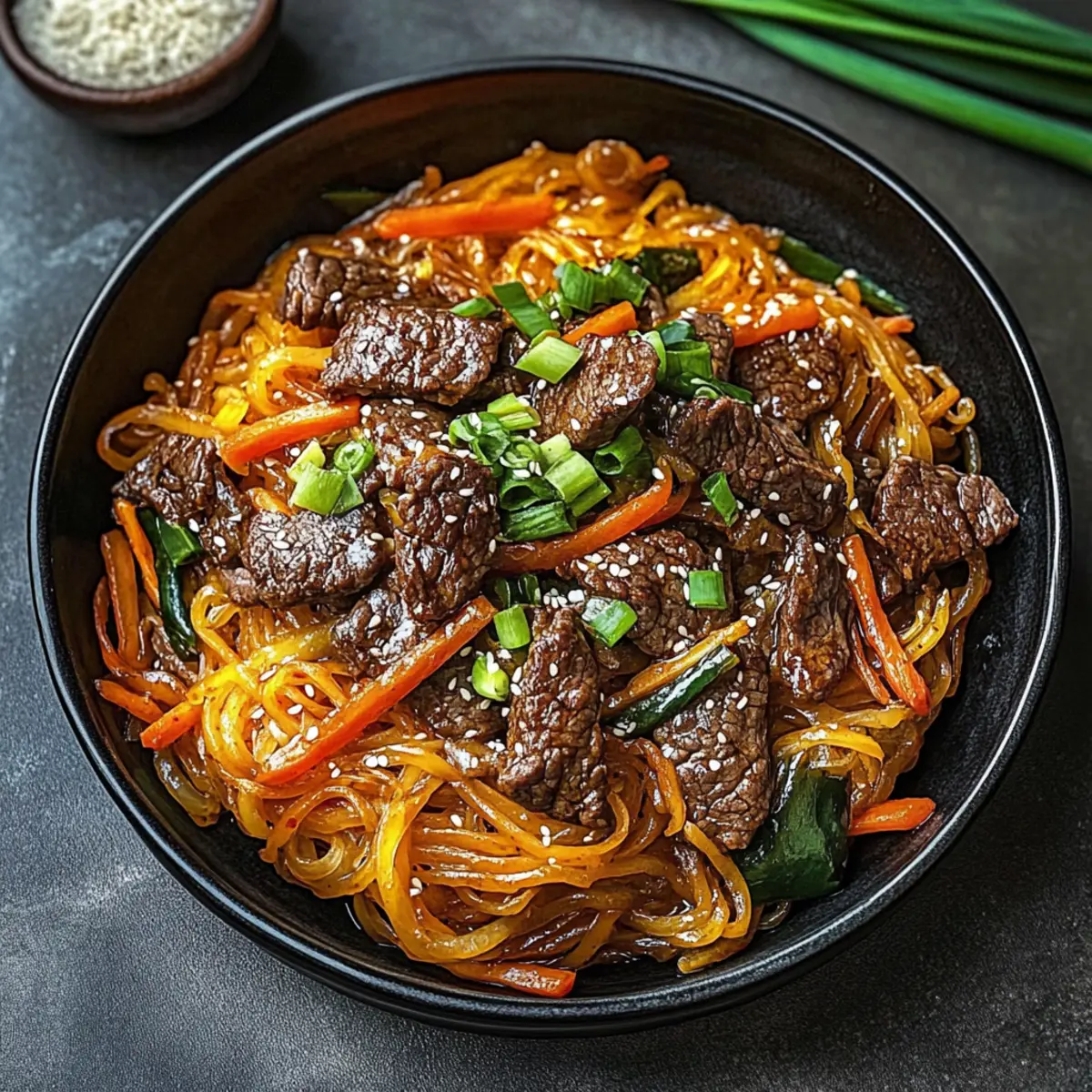
What to Serve with Traditional Korean Japchae?
Enhance your dining experience with delightful sides that bring out the best in this vibrant noodle dish.
-
Steamed Rice: A classic pairing that helps soak up the delicious sauce, balancing the sweet-savory flavors of Japchae.
-
Korean Kimchi: This tangy, fermented side adds a spicy kick and complements the umami notes, making for a well-rounded meal.
-
Savory Korean Grilled Chicken: Juicy chicken marinated in a Korean sauce provides a hearty protein contrast that many will love.
-
Fresh Vegetable Salad: A crisp salad with a light sesame dressing offers a refreshing crunch that brightens the meal and adds nutrition.
-
Cucumber Pickles: The slight sweetness of these pickles enhances the dish’s flavors and offers a delightful contrast in texture.
-
Miso Soup: Warm and comforting, this broth pairs nicely with Japchae, enhancing the dining experience while adding warmth.
-
Korean Fried Tofu: Crispy on the outside and soft on the inside, this dish contributes an additional textural element that beautifully contrasts the chewy noodles.
Expert Tips for Perfect Japchae
-
Noodle Consistency: Ensure the sweet potato noodles are soaked properly and avoid overcooking; they should be chewy yet tender.
-
High Heat Cooking: Use high heat when stir-frying to keep the vegetables crisp and vibrant. This also helps to prevent the noodles from becoming mushy.
-
Taste Adjustments: Always taste and adjust the seasoning at the end of cooking. Adding a bit more soy sauce or sesame oil can elevate the flavors of your Japchae.
-
Protein Flexibility: Feel free to customize the protein; chicken and tofu also work great. Just remember to adjust cooking times accordingly.
-
Fresh Vegetables: Use seasonal vegetables for the best flavor and nutrition. This not only enhances the dish but also showcases the beautiful colors.
-
Make-Ahead Tips: You can prepare Japchae in advance; it keeps well in the fridge, and the flavors meld beautifully overnight!
How to Store and Freeze Japchae
Fridge: Store leftover Japchae in an airtight container in the fridge for up to 3 days. Reheat gently in a skillet over low heat to keep the noodles from getting mushy.
Freezer: For longer storage, place cooled Japchae in a freezer-safe container and freeze for up to 2 months. Thaw in the fridge overnight before reheating.
Portioning: Consider dividing the dish into smaller portions before freezing. This makes it easier to defrost only what you need for a quick meal later on.
Reheating: When reheating, add a splash of water or a little extra soy sauce to revitalize the dish. Toss well to ensure even heat distribution and enjoy your delicious Japchae!
Japchae Variations & Substitutions
Feel free to play around with your Japchae and make it your own masterpiece that tantalizes your taste buds!
-
Protein Swaps: Substitute beef with chicken or tofu for a delightful twist, ensuring similar taste profiles with every option. This versatility makes it perfect for accommodating various dietary preferences.
-
Vegetable Medley: Enhance the dish with seasonal vegetables like zucchini, mushrooms, or bok choy. Each fresh veggie brings its unique flavor, adding depth to your stir-fry.
-
Spicy Kick: Add a spoonful of gochujang or sprinkle in red pepper flakes to elevate the heat. Spice lovers will relish this fiery upgrade that complements the sweetness of the noodles beautifully.
-
Gluten-Free Option: Should you desire a wheat-free option, utilize rice noodles instead of sweet potato noodles. This keeps your Japchae gluten-free while still satisfying!
-
Savory Sauces: Experiment with adding mushroom soy sauce or coconut aminos for a different flavor profile. They can create a lovely umami depth that will surprise your guests.
-
Nutty Flavor Burst: Drizzle some additional toasted sesame oil at the end for an intensified nutty aroma. This last-minute addition adds layers of flavor that leaves everyone wanting more.
-
Crunchy Texture: Toss in some roasted nuts, such as cashews or peanuts, right before serving for that delightful crunch. The extra texture makes each bite interesting and fulfilling.
-
Sweet Touch: If you’re feeling adventurous, consider adding a dash of honey or maple syrup to balance the saltiness. This unexpected hint of sweetness transforms the dish into a well-rounded culinary delight.
With these variations, your Japchae will be anything but ordinary! If you want to explore similar Korean dishes or discover more delectable ideas, keep the adventures going in your kitchen!
Make Ahead Options
These Japchae noodles are perfect for meal prep, making weeknight dinners a breeze! You can prep the noodles and vegetables up to 24 hours in advance. Simply soak the sweet potato glass noodles as directed, drain, and store them in an airtight container. Chop your vegetables beforehand and refrigerate them to keep them fresh. When you’re ready to serve, simply stir-fry the vegetables, add in your protein of choice, and toss everything together with the noodles and sauce. This way, you’ll enjoy delicious Japchae with minimal effort, saving time without sacrificing flavor! Remember, reheating should be gentle to maintain that signature chewy texture of the noodles.
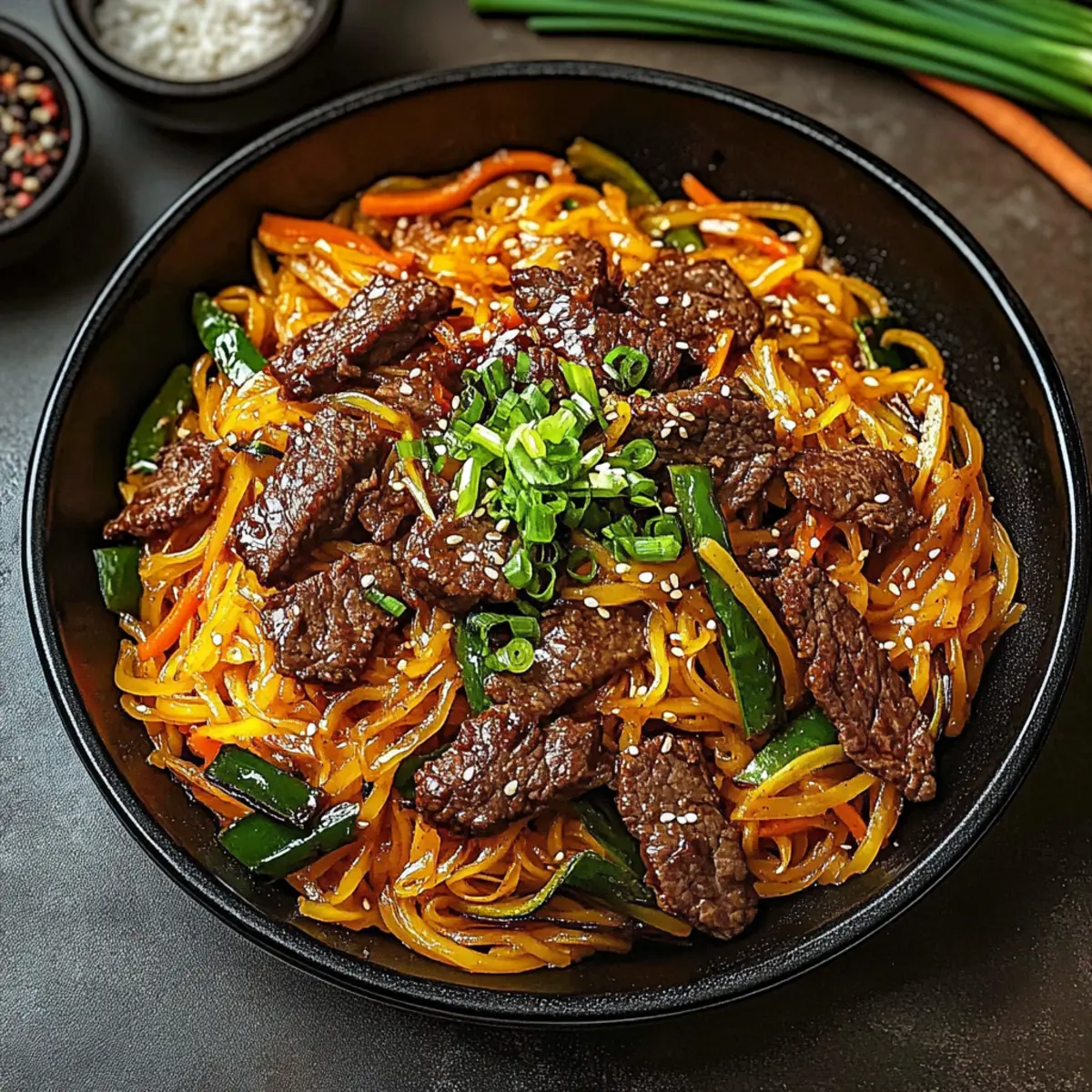
Japchae Recipe FAQs
What type of sweet potato noodles should I use for Japchae?
For the best results, use authentic sweet potato glass noodles, often labeled as “dangmyeon.” These noodles have a unique chewy texture and a slightly sweet flavor. If you’re unable to find them, wheat noodles can be a nice alternative, but keep in mind that it will no longer be gluten-free.
How should I store leftover Japchae?
Absolutely! To keep your Japchae fresh, store it in an airtight container in the fridge for up to 3 days. When reheating, do so gently on low heat in a skillet to prevent the noodles from becoming mushy. Adding a splash of water helps revive the texture.
Can I freeze Japchae?
Yes, you can! To freeze, wait until the Japchae has cooled completely, then place it in a freezer-safe container. It will keep well for up to 2 months. When you’re ready to enjoy it, thaw it in the fridge overnight and then reheat on the stove, adding a little soy sauce or water to moisten it as it heats.
What should I do if my noodles are overcooked?
If you accidentally overcook your noodles, don’t fret! Here’s a quick fix: toss the overcooked noodles in cold water immediately to stop the cooking process. You could also try adding them to a stir-fry where they can absorb moisture and flavors, effectively blending them into the dish.
Is Japchae safe for pets or those with certain allergies?
It’s best to be cautious! While Japchae itself is not inherently toxic to pets, the soy sauce and garlic used in the recipe can be harmful to cats and dogs. If you’re cooking for someone with allergies, consider using low-sodium soy sauce and double-check all ingredients to ensure they’re safe for consumption.
How do I customize the protein in my Japchae?
Very simply! You can swap out the beef for chicken or tofu, depending on your preferences. For chicken, slice it thinly and sauté until fully cooked, which should take about 5-7 minutes. For tofu, use firm tofu, press it to remove excess moisture, and cube it before cooking for about 4-5 minutes until golden brown.
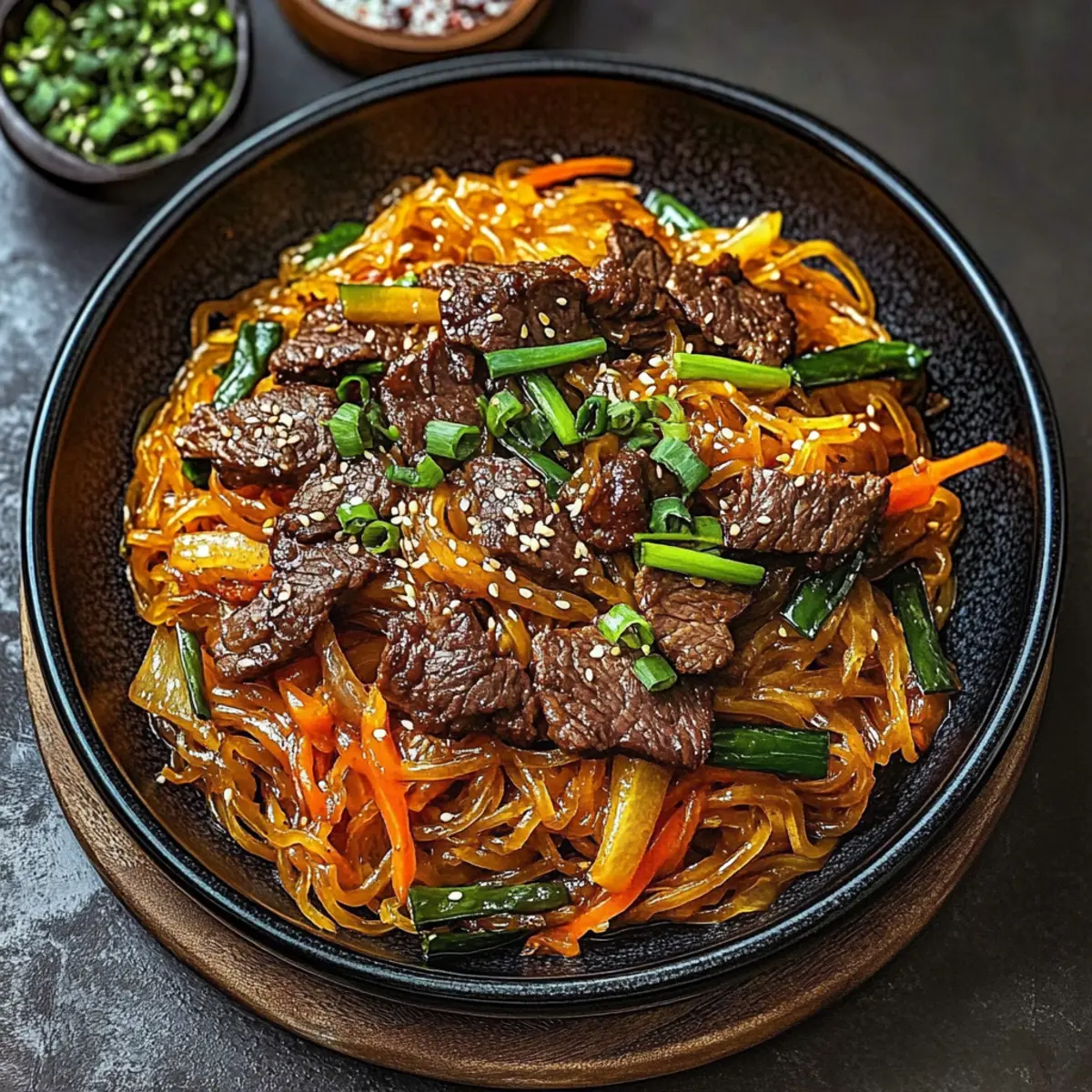
Delicious Japchae: Your Ultimate Guide to Korean Noodle Bliss
Ingredients
Equipment
Method
- Soak the sweet potato glass noodles in hot water for 20-30 minutes until softened, then drain.
- In a skillet, heat oil and cook the sliced beef (or chicken/tofu) for 3-5 minutes until browned.
- Stir-fry the mixed vegetables in the same skillet for 4-5 minutes until tender yet crisp.
- Combine noodles and protein with the vegetables, adding soy sauce and sesame oil, and cook for 2-3 minutes.
- Serve warm, garnished with chopped green onions.