Advertisement
As I chopped the vibrant vegetables for my Mediterranean Salmon Bowls, the kitchen filled with the tantalizing aroma of fresh herbs and spices. This recipe captures the essence of bright, sun-kissed flavors that transport me straight to the shores of the Mediterranean. Perfect for those busy weeknights, these Mediterranean Salmon Bowls not only come together in a flash but are also a family-friendly feast that everyone will love. The flaky Copper River salmon is paired with a creamy yogurt sauce that adds a luscious twist to each bite, making this dish a nutritious and satisfying choice for any meal. Are you ready to elevate your dinner routine and explore a world of fresh and delightful flavors? Let’s dive in!
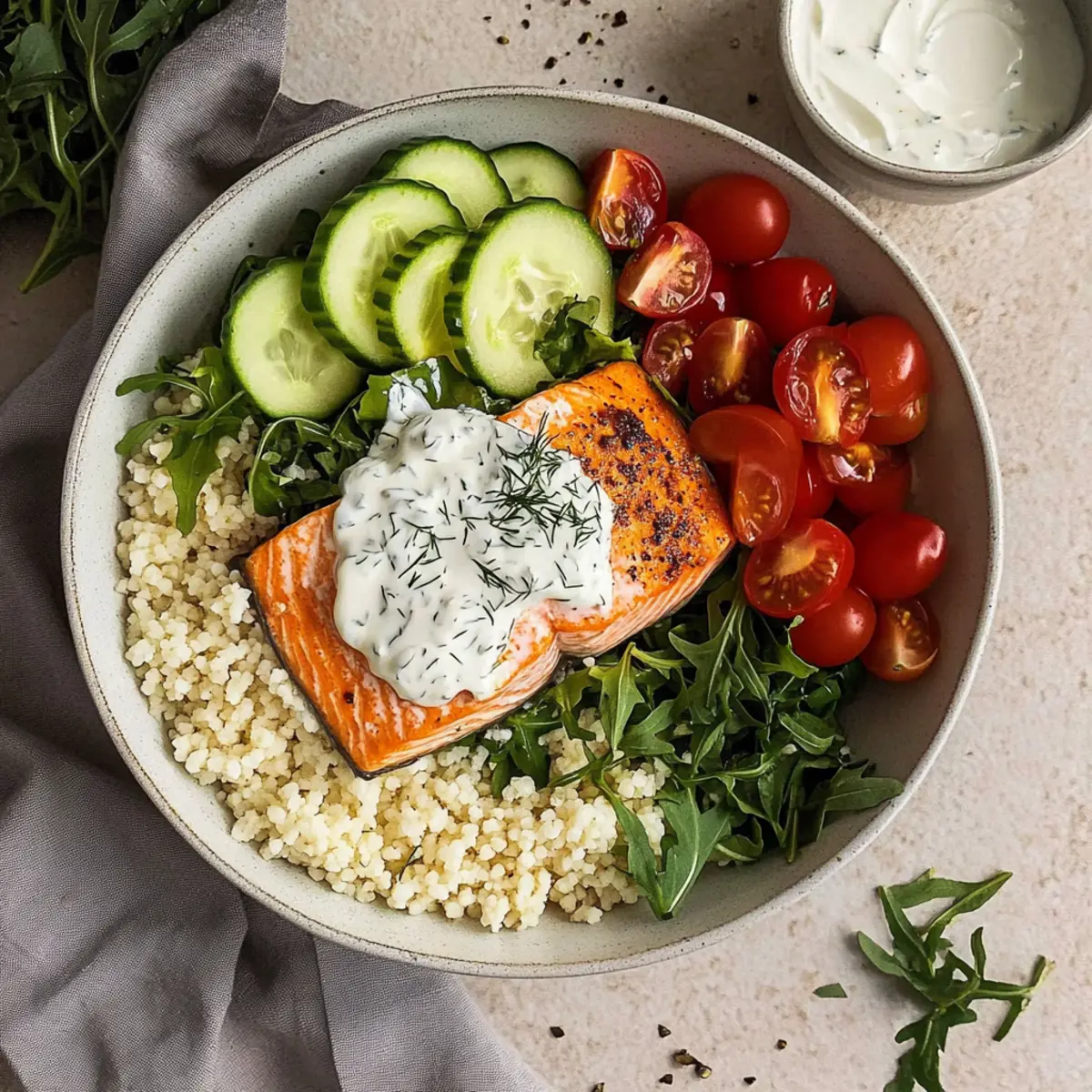
Why Are Mediterranean Salmon Bowls A Must-Try?
Flavorful and vibrant, these Mediterranean Salmon Bowls are a perfect combination of fresh ingredients and rich taste. Quick and easy to prepare, the recipe is tailored for busy nights while ensuring your family enjoys a nutritious meal. Versatile at heart, swap couscous for quinoa or add seasonal veggies to customize it to your liking. Visually stunning, with colorful layers of salmon and vegetables, they’ll impress your guests at dinner parties—or enjoy them as a casual weeknight treat. Try these delicious bowls, which remind me of the sunny Mediterranean shores, and elevate your dining experience today! For more wholesome ideas, check out our Low Calorie Healthy Greek Chicken Bowls Packed with Flavor or explore other recipes featuring healthy seafood options.
Mediterranean Salmon Bowls Ingredients
For the Couscous
• Couscous – A fantastic base for the bowl, adding texture and substance; try quinoa for a gluten-free substitute.
• Olive Oil (2 tbsp + 1 tbsp) – Provides richness and helps cook the salmon and couscous; lemon-infused oil adds zest.
• Salt (½ tsp + 1 tsp) – Essential for enhancing flavors; adjust according to dietary needs.
Advertisement
For the Salmon
• Salmon Fillet (1 large) – A nutritious source of protein packed with omega-3s; opt for high-quality, wild-caught salmon for best results.
• Smoked Paprika (2 tsp) – Offers a delicious smoky flavor; feel free to use regular paprika if preferred.
• Black Pepper (½ tsp + ½ tsp) – A must for seasoning; freshly ground is always more flavorful.
• Dried Oregano (½ tbsp) – Infuses the dish with herbaceous notes; dried thyme is a suitable alternative.
• Lemon (1) – Brightens the entire dish and is used in both the salmon seasoning and creamy sauce.
For the Creamy Sauce
• Plain Greek Yogurt (¾ cup) – Low-fat alternative that adds creaminess; can substitute with dairy-free yogurt for a vegan option.
• Sour Cream (¼ cup) – Enhances the richness of the sauce; more Greek yogurt can lighten it.
• Mayonnaise (¼ cup) – Provides a delightful creamy texture; consider vegan mayo for a plant-based twist.
• Dried Dill (2 tsp) – Contributes a fresh, herbal taste; fresh dill can be used if available.
For the Fresh Veggies
• Grape Tomatoes (1 pint) – Bursting with sweetness and juiciness; swap with cherry tomatoes for a similar effect.
• English Cucumber – Adds a satisfying crunch; any cucumber variety will work.
• Red Onion (¼ cup) – Offers a hint of sharpness; shallots can be a milder substitute.
• Fresh Arugula – Adds a peppery freshness; spinach or mixed greens are great alternatives.
For the Drizzle
• Olive Oil, Red Wine Vinegar, Salt, and Pepper – Use these to dress your veggies; taste and adjust according to your preference.
Now, gather your ingredients and let’s create these delightful Mediterranean Salmon Bowls bursting with flavor!
Step‑by‑Step Instructions for Mediterranean Salmon Bowls
Step 1: Cook the Couscous
Begin by bringing 3 cups of water to a rolling boil in a medium saucepan. Add in the couscous along with 2 tablespoons of olive oil and ½ teaspoon of salt. Reduce the heat to low, cover, and let it simmer for about 20 minutes, or until all the water is absorbed. Once cooked, remove from heat and let it steam covered for an additional 5 minutes for a fluffier texture.
Step 2: Preheat the Oven
While your couscous cooks, preheat your oven to 350°F (175°C). This ensures your Mediterranean Salmon Bowls come together perfectly, with the salmon baking to flaky perfection. Prepare a baking sheet by lightly greasing it with olive oil, ready to host the star of the dish.
Step 3: Prepare the Salmon
Carefully pat your salmon fillet dry with paper towels to remove excess moisture. Brush one tablespoon of olive oil over the fillet, then season it well with 2 teaspoons of smoked paprika, 1 teaspoon of salt, ½ teaspoon of black pepper, and ½ tablespoon of dried oregano. Ensure even coverage for maximum flavor in your Mediterranean Salmon Bowls.
Step 4: Bake the Salmon
Place the seasoned salmon fillet skin-side down on the prepared baking sheet and bake it in the preheated oven for 13-16 minutes. Your goal is to achieve a perfectly flaky texture that easily separates with a fork and is opaque in the center. Once done, squeeze fresh lemon juice over the top for an extra burst of brightness.
Step 5: Make the Creamy Sauce
In a medium bowl, combine ¾ cup of plain Greek yogurt, ¼ cup of sour cream, and ¼ cup of mayonnaise. Add 2 teaspoons of dried dill, salt, pepper, and the juice of half a lemon to create a zesty, creamy sauce. Whisk well until smooth and set aside, as this delightful concoction will elevate your Mediterranean Salmon Bowls.
Step 6: Assemble the Bowls
To assemble your Mediterranean Salmon Bowls, start with a generous layer of the fluffy couscous as your base. Next, add a colorful array of chopped grape tomatoes, diced cucumber, and thinly sliced red onion on top. Gently place the baked salmon fillet on the vegetables, creating a gorgeous presentation in your bowl.
Step 7: Drizzle and Serve
Finish your Mediterranean Salmon Bowls with a drizzle of the creamy sauce over the top. To enhance the flavors, drizzle some olive oil and red wine vinegar over the fresh veggies, seasoning them with salt and pepper as desired. Serve immediately with lemon wedges on the side for an extra zesty touch of Mediterranean goodness!
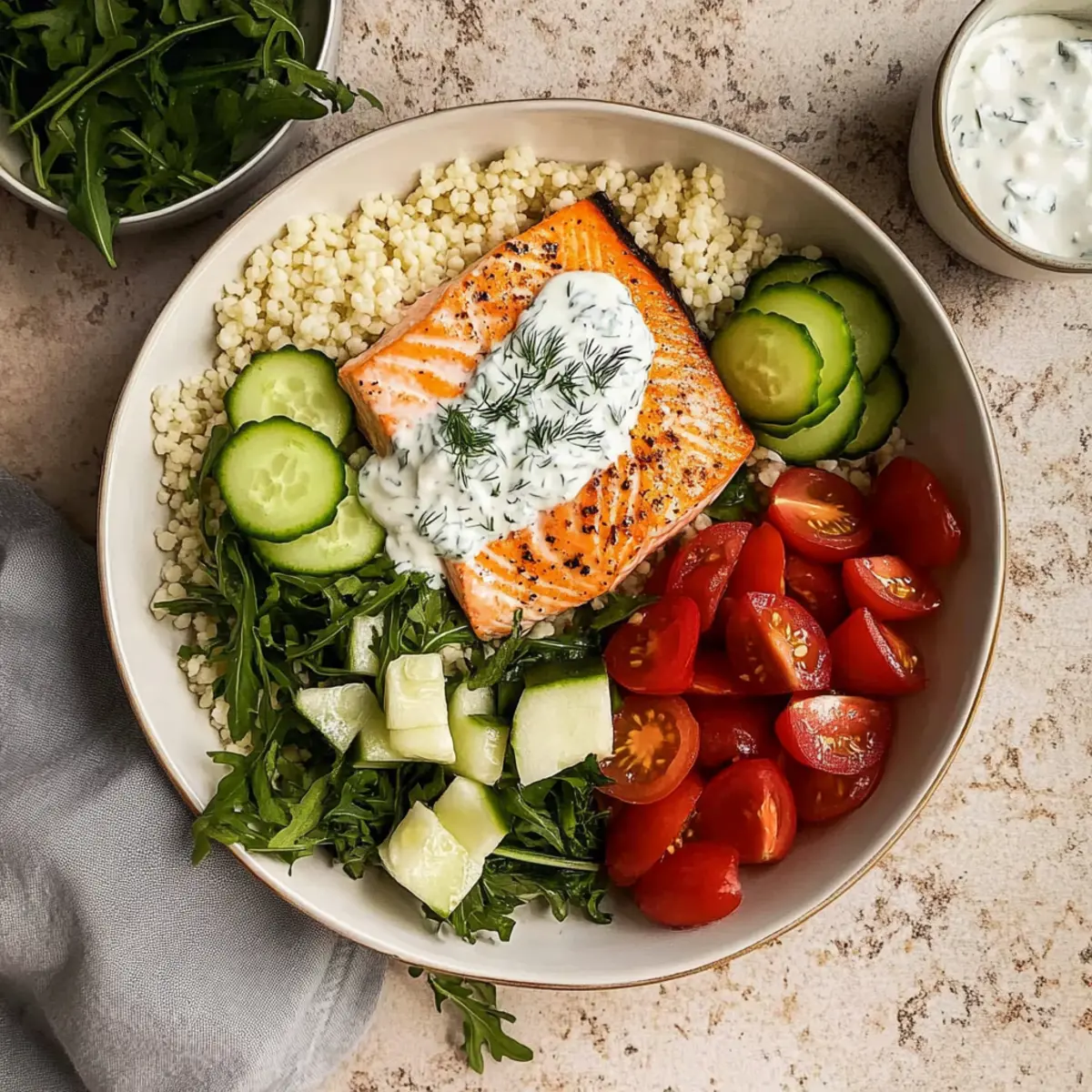
Expert Tips for Mediterranean Salmon Bowls
• Fresh Salmon Matters: Always opt for the freshest high-quality salmon, preferably wild-caught, to enhance flavor and texture in your Mediterranean Salmon Bowls.
• Perfect Couscous: Avoid overcooking the couscous; once water is absorbed, let it steam off heat for a fluffy finish.
• Zesty Sauce Balance: Taste the creamy sauce before serving and adjust seasoning as needed; the right balance of salt and lemon is crucial.
• Prep Ahead: For a quick meal, preprepare the vegetables and sauce; they can be stored separately in the fridge for up to 3 days.
• Customize Your Veggies: Feel free to swap in seasonal vegetables like bell peppers or zucchini for extra nutrition and color in your bowls.
Mediterranean Salmon Bowls Variations & Substitutions
Feel free to put your personal spin on these Mediterranean Salmon Bowls and make them uniquely yours!
-
Quinoa Substitute: For a gluten-free twist, swap couscous for quinoa, adding a nutty flavor and extra protein.
-
Veggie Boost: Toss in roasted bell peppers or zucchini for added texture and a nutritional punch. Fresh colors boost the bowl’s appeal!
-
Different Protein: Replace salmon with grilled chicken or shrimp for an exciting variation that still delivers great taste.
-
Dairy-Free Sauce: Use a plant-based yogurt and a vegan mayo to whip up a creamy sauce that’s perfect for dairy-free diets.
-
Additional Greens: Mix in some fresh spinach or kale for extra nutrients and a lovely green burst, enhancing both flavor and presentation.
-
Spicy Kick: Add a sprinkle of red pepper flakes to the sauce or directly on the salmon for those who enjoy a bit of heat.
-
Seasonal Freshness: Choose vegetables based on the season—like asparagus in spring or roasted root veggies in fall—to keep things interesting year-round.
For more delicious ideas that cater to a healthy lifestyle, don’t miss our Low Calorie Healthy Greek Chicken Bowls Packed with Flavor. And if seafood is your enjoyment, explore our other recipes featuring healthy seafood options. Enjoy your culinary adventure!
How to Store and Freeze Mediterranean Salmon Bowls
Fridge: Store leftover Mediterranean Salmon Bowls in an airtight container for up to 3 days. Keep the sauce separate to maintain freshness.
Freezer: For longer storage, freeze salmon and couscous components separately in airtight containers for up to 3 months. Reheat thoroughly before serving.
Reheating: Thaw overnight in the fridge if frozen, then reheat the salmon in the oven at 350°F (175°C) for about 10 minutes until warmed through.
Assembly Tip: After reheating, assemble the bowls with fresh, chilled vegetables and drizzle with the creamy sauce. This ensures vibrant flavors and crispy textures.
What to Serve with Mediterranean Salmon Bowls
Let your culinary imagination run wild as you create a delightful spread that complements the vibrant flavors of this nutritious dish.
- Warm Pita Bread: Perfect for dipping into the creamy sauce, pita bread adds a delightful chewy texture that pairs nicely with the freshness of the salmon bowls.
- Quinoa Salad: A light and herby quinoa salad complements the meal with its fluffy texture and fresh ingredients, adding an exciting variation to your table.
- Charred Vegetables: Roasting seasonal vegetables brings out their sweetness and adds a smoky flavor that enhances the freshness of the salmon bowls.
- Lemon-Tahini Dressing: Drizzling this tangy sauce over the bowls adds creamy depth while echoing the Mediterranean theme with its nutty flavor.
- Crispy Roasted Potatoes: The crunchy exterior and fluffy centers of roasted potatoes provide a satisfying contrast to the flaky salmon and fluffy couscous.
- Sparkling Water with Lemon: Quenching your thirst with refreshing sparkling water elevates the meal, while the lemon enhances the citrus notes found in both the salmon and the sauce.
- Mint Yogurt Dip: This refreshing dip beautifully balances flavors with cool mint, making for a unique, zingy twist that brings additional brightness to each bite.
Make Ahead Options
These Mediterranean Salmon Bowls are perfect for meal prep, allowing you to enjoy a nutritious family dinner with minimal last-minute effort! You can prepare the couscous and creamy sauce up to 3 days in advance, storing them separately in airtight containers in the refrigerator to keep everything fresh. Additionally, pre-chop the vegetables (grape tomatoes, cucumber, and red onion) and keep them refrigerated as well. When you’re ready to serve, simply bake the salmon fillet (which you can season just before cooking for maximum flavor) and assemble your bowls. Drizzle the creamy sauce over the top for a vibrant finish—just as delicious as when made fresh!
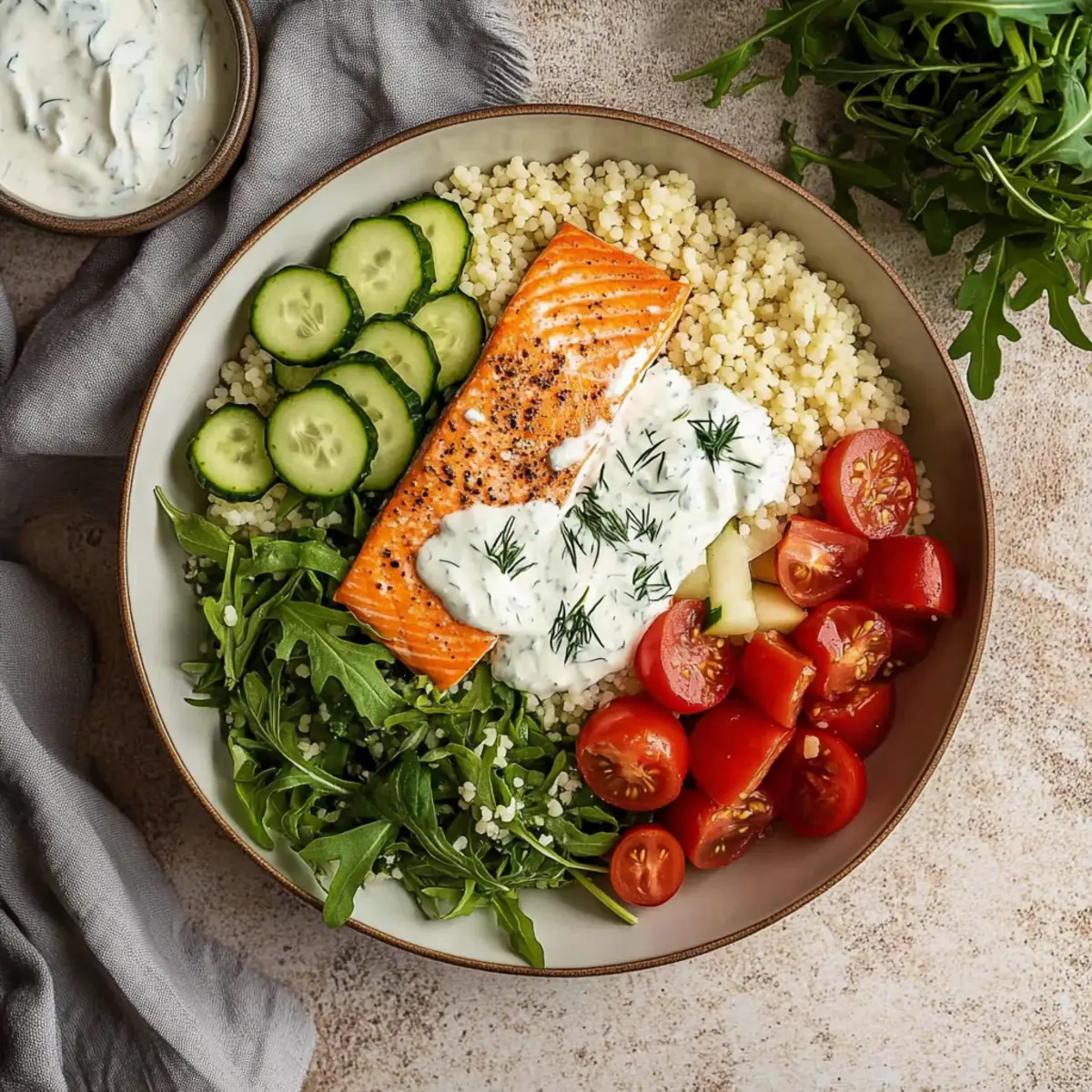
Mediterranean Salmon Bowls Recipe FAQs
How do I choose ripe ingredients for my Mediterranean Salmon Bowls?
Absolutely! When selecting your ingredients, choose tomatoes that are firm and vibrant with no dark spots. Look for a cucumber that is crisp and free of blemishes. For herbs like dill or oregano, opt for fresh ones whenever possible, as their flavor is much brighter. And don’t forget the salmon—select fillets that are bright in color and have a fresh, clean scent.
How should I store leftovers of the Mediterranean Salmon Bowls?
Very! To store your Mediterranean Salmon Bowls, place leftovers in an airtight container in the refrigerator, where they’ll stay fresh for up to 3 days. If you need to separate the components, that’s a great idea! Keeping the creamy sauce separate helps maintain its texture and flavor.
Can I freeze Mediterranean Salmon Bowls for later use?
Definitely! To freeze the components, pack the salmon and couscous in airtight containers, ensuring they’re tightly sealed to prevent freezer burn. They can be stored for up to 3 months. When you’re ready to enjoy, thaw them overnight in the fridge. Reheat the salmon in the oven for about 10 minutes at 350°F (175°C) to restore its flakiness.
What if my salmon is overcooked?
If your salmon turns out overcooked, don’t worry—this can happen! Next time, aim for a cooking time closer to 13 minutes, checking it for flakiness with a fork. Also, consider using a meat thermometer; the internal temperature should read 145°F (63°C). If you need to salvage overcooked salmon, try flaking it and mixing it into a salad or combining it with extra creamy sauce to enhance moisture.
Is this recipe suitable for people with allergies?
Absolutely! This Mediterranean Salmon Bowl recipe contains ingredients like Greek yogurt and mayonnaise that can trigger dairy allergies. For a dairy-free version, simply replace these with coconut yogurt or a plant-based mayo. If you’re concerned about gluten, swap couscous for quinoa or cauliflower rice to accommodate dietary restrictions!
Can pets eat salmon from these bowls?
While salmon is safe for dogs as a protein source, ensure that it is plain and devoid of seasoning, especially the smoked paprika and salt used in this recipe. Always consult your veterinarian before introducing new foods, and best to serve it without any added sauces or dressings!
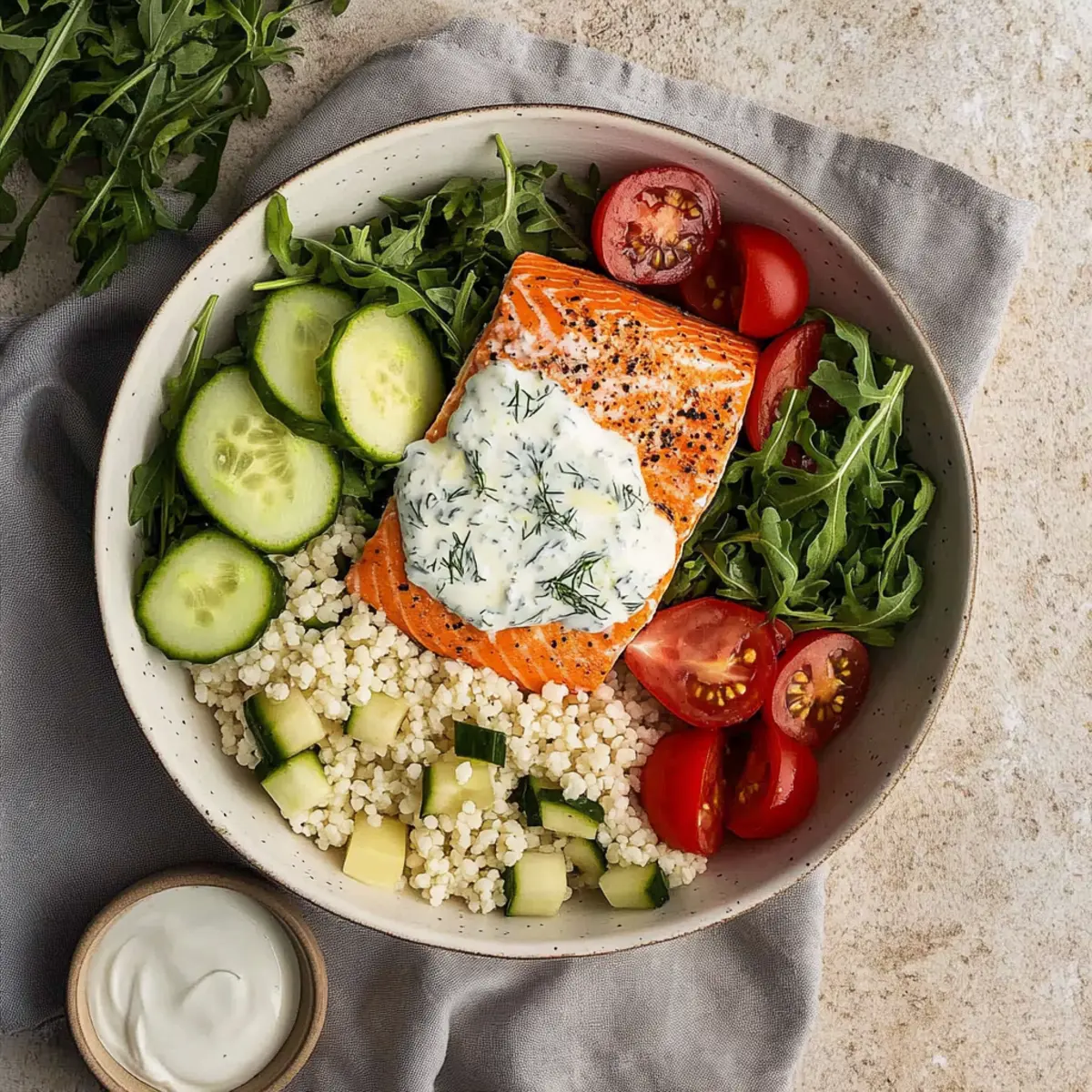
Mediterranean Salmon Bowls: Fresh Flavors for Family Meals
Ingredients
Equipment
Method
- Cook the Couscous: Bring 3 cups of water to a boil. Add couscous, 2 tbsp olive oil, and ½ tsp salt. Reduce heat, cover, simmer for 20 minutes, then remove from heat and let steam for an additional 5 minutes.
- Preheat the Oven: Preheat your oven to 350°F (175°C) and grease a baking sheet with olive oil.
- Prepare the Salmon: Pat the salmon fillet dry, brush with 1 tbsp olive oil, and season with smoked paprika, salt, black pepper, and oregano.
- Bake the Salmon: Place the salmon on the baking sheet and bake for 13-16 minutes until flaky. Squeeze fresh lemon juice over it once done.
- Make the Creamy Sauce: Combine Greek yogurt, sour cream, mayonnaise, dill, salt, pepper, and lemon juice in a bowl. Whisk until smooth.
- Assemble the Bowls: Layer couscous, followed by tomatoes, cucumber, and red onion. Place the baked salmon on top.
- Drizzle and Serve: Add the creamy sauce, a drizzle of olive oil and red wine vinegar over veggies, and season with salt and pepper. Serve with lemon wedges.